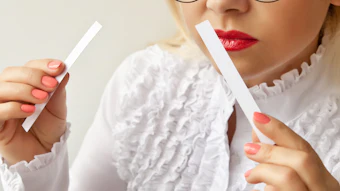
A growing number of users of GLP-1 weight-loss medications are reporting an unexpected side effect that sits far outside the drugs’ intended metabolic targets: a reshaping of smell itself. Across patient anecdotes, clinician observations and emerging cultural signals, a pattern is forming in which appetite suppression appears to be accompanied by heightened, altered or newly emotionally charged responses to fragrance.
The reports span multiple compounds in the GLP-1 class, including Ozempic, Wegovy, Mounjaro and Zepbound, and appear in both clinical interviews and informal online communities.
In reporting from HuffPost, patients described fragrances taking on an almost intrusive intensity or emotional stickinessa. One comedian said a single Le Labo scent became an obsession for days, while others described a shift toward frequent reapplication, layering and rapidly changing scent preferences. Some users on GLP-1 drugs reported gravitating toward dense florals and vanilla-heavy compositions, building collections that expanded rapidly as appetite for food diminished.
Meanwhile, a 2025 personal essay in Allure describedb the opposite reaction: formerly beloved perfumes becoming unbearable, especially gourmand or edible-smelling notes such as vanilla, caramel and fig. In some cases, the aversion was likened to pregnancy-like hormonal shifts, with scents that once signaled pleasure instead triggering nausea or discomfort.
Taken together, these accounts point to a spectrum of olfactory changes rather than a single predictable effect: increased sensitivity, decreased tolerance, emotional repatterning or, in some cases, a substitution effect in which fragrance becomes more salient as food loses its hedonic pull.
Researchers quoted in the HuffPost reporting emphasize that the phenomenon is real in the experiential sense but not yet clinically mapped. Fatima Cody Stanford of Harvard Medical School noted that patients on GLP-1 drugs sometimes describe “stronger” or more noticeable smells, particularly a reduced tolerance for heavy or fried food odors, alongside occasional increased awareness of perfumes and ambient scents. However, she stressed that the theme is “increased sensory awareness rather than a complete change in smell.”
More mechanistic hypotheses are beginning to emerge from olfaction research. Scientists at institutions including the Monell Chemical Senses Centerc suggest several possible pathways: altered reward signaling in the brain, nausea-linked aversion conditioning and even direct modulation of olfactory processing, given that GLP-1 receptors are present in brain regions involved in smell and appetite regulation. One proposed model suggests that as food reward signaling decreases, other sensory channels—particularly scent—become more psychologically prominent.
At the same time, researchers caution that there are no large controlled studies yet confirming a direct causal link between GLP-1 drugs and changes in olfaction.
What is clearer is that these personal reports are now intersecting with a visible shift in fragrance culture itself.
A 2025 analysis from The Guardiand highlighted a surge in gourmand perfumes—fragrances built around edible notes such as vanilla, coffee, caramel and pastry-like accords. Market research cited in the report shows double-digit growth in dessert-inspired fragrance launches, alongside rising online searches and social media engagement for sweet scent profiles.
Industry analysts have suggested a possible feedback loop: as GLP-1 medications suppress appetite and reduce food consumption, consumers may be drawn to decadent scent experiences that simulate indulgence without eating. In this framing, fragrance becomes a form of sensory compensation—pleasure redirected from ingestion to inhalation.
The trend is already visible in product strategy. Celebrity fragrance lines and mainstream launches have leaned heavily into dessert-coded scent profiles, while social media communities have embraced “scent layering” and fragrance collecting as a form of identity expression and mood regulation.
Across both medical reporting and beauty industry analysis, a shared idea recurs: GLP-1 drugs may be subtly reorganizing how reward is experienced. With food less central, smell—one of the most memory-linked and emotionally charged senses—appears to be gaining psychological weight.
Whether this represents true neurobiological change, conditioned association, or simply heightened attention remains unresolved. But as clinicians begin to hear more consistent anecdotes and the fragrance market continues its shift toward edible nostalgia, the overlap between metabolic medicine and sensory culture is becoming harder to ignore.
FOOTNOTES
ahttps://www.huffpost.com/entry/glp-1s-smell-change_l_6a063709e4b0a33000e07180
bhttps://www.allure.com/story/semaglutide-glp-1-changed-sense-of-smell
chttps://monell.org/monell-center-researchers-present-latest-findings-at-international-meeting-on-consumer-sensory-science/
dhttps://www.theguardian.com/fashion/2025/aug/23/foodie-perfumes-weight-loss-drugs